Skip links
Interpack Messe Düsseldorf Platform for the global packaging industry

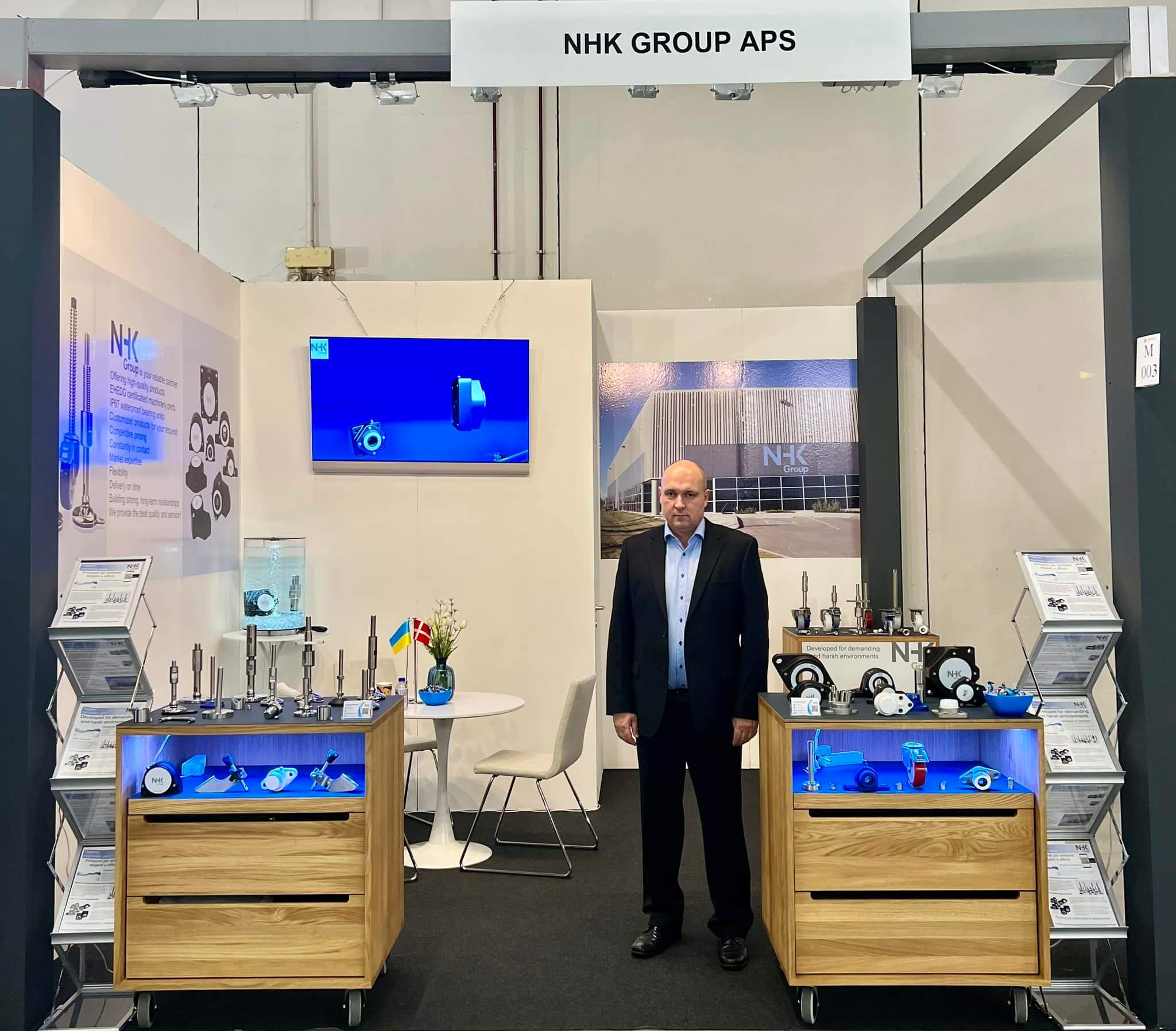
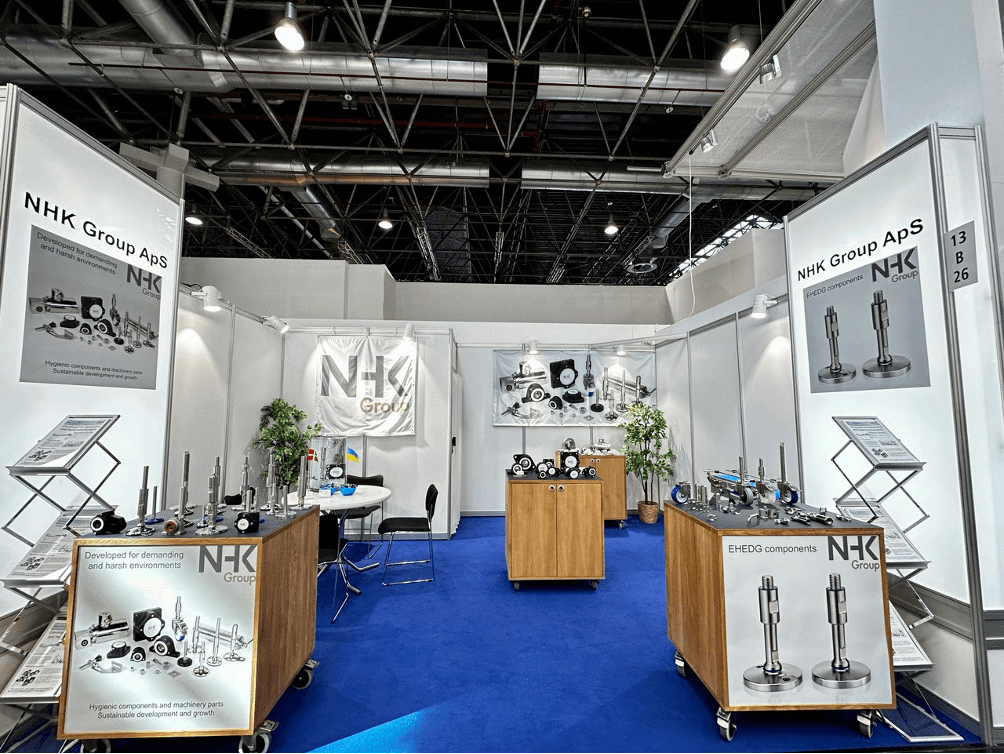
NHK Group exhibited in the Interpack 2023

Interpack is one of the world’s most significant trade fairs for the packaging and processing industry. It takes place in Düsseldorf, Germany, and is typically held every three years.

The fair showcases a wide range of packaging technologies, materials, and solutions, making it a key event for professionals in the packaging, processing, and related industries.

Get in touch

Let us share our experience so you can find the right equipment for your specific industry.
Contact us here

Explore more

Browse our product line for the machinery parts you need.

Product Line

NHK insight

Practical experience from hygienic machinery components

“In many projects, the cost of one product hold easily exceeds the extra investment in properly certified components.”

- NHK Team

Hygienic Design Principles for Industrial Machinery Components

Hygienic design — the engineering discipline focused on creating equipment and components that can be reliably cleaned to microbiologically safe standards — has evolved from a niche specialty to a mainstream requirement in food and pharmaceutical manufacturing. Understanding the core principles enables engineers and procurement professionals to make better component specification decisions and reduce contamination risk across production facilities.

The fundamental principle of hygienic design is cleanability: every surface of a component that could contact food product, processing water, or cleaning agents must be accessible for cleaning, made from appropriate materials, and designed to drain completely without retaining liquid or particulate matter. This principle alone eliminates many standard industrial component designs — bearings with open raceways, leveling feet with hollow shanks, casters with exposed ball races and horizontal surfaces.

Material selection in hygienic design follows a hierarchy determined by application zone. Food-contact surfaces require materials complying with relevant food contact legislation (EU 10/2011, FDA 21 CFR), that do not impart taste, odour, or toxic substances to food, and that maintain surface integrity under repeated CIP exposure. Non-product-contact surfaces in food zones must be corrosion-resistant and cleanable, typically requiring austenitic stainless steel (AISI 304 or 316) or certified food-grade polymers.

Geometric design requirements prohibit dead zones, horizontal surfaces that retain water, narrow crevices (less than 3 mm accessible cleaning width per EHEDG guidelines), rough surfaces (Ra >0.8 µm in product contact zones), and threaded connections in food-contact areas where avoidable. These requirements have driven significant innovation in component design at manufacturers including NHK Group, whose certified hygienic ranges eliminate all standard contamination harbourage points.

Related Resources

Understanding Machinery Components, Hygienic Design & Protection Standards

Modern industrial production depends on far more than simply selecting a part that fits a shaft or matches a drawing. In practice, engineers, maintenance teams, OEM designers, and procurement specialists need components that support uptime, simplify cleaning, reduce maintenance intervals, and perform consistently in harsh operating environments. That is especially true in food processing, packaging, pharmaceutical production, and other sectors where machinery must balance mechanical strength with hygienic design.

One of the most common comparison points in machinery design is the difference between pillow block units and flange bearing units. Although both support rotating shafts, the mounting method, footprint, alignment behavior, and surrounding machine geometry often determine which option is the better fit. Pillow block units are frequently chosen when a shaft must be supported on a machine frame with straightforward installation and service access. Flange units are often preferred where compact mounting on a side wall, plate, or flat machine surface makes more sense. In real production environments, choosing between these bearing arrangements affects not only installation speed, but also washdown access, replacement planning, and long-term maintenance costs.

Material selection is equally important. Stainless steel components are widely used because they combine corrosion resistance with strength and long service life, but not all stainless grades behave the same way. For example, 420 and 440 stainless steel are often discussed together, yet they serve different priorities. A 440 grade is typically selected when higher hardness and wear resistance matter most, while 420 stainless steel is often preferred when corrosion resistance and practical use in wet or chemically exposed environments take priority. For engineers working in food processing or hygienic machinery design, these distinctions are not theoretical. They influence durability, cleanability, and whether a machine continues to perform as expected after repeated washdown cycles.

Protection ratings are another major decision factor. Many industrial buyers know the terms IP67, IP68, and IP69K, but the practical meaning of these ratings is often misunderstood. An ingress protection rating is not just a marketing label. It is a real indication of how well a component housing, sensor, actuator, or enclosure can resist dust and water exposure. In dry manufacturing zones, a lower protection class may be sufficient. In wet rooms, high-humidity environments, or equipment that is cleaned aggressively with water and detergents, the correct rating becomes essential. Components that are under-specified may fail prematurely, while over-specifying every part can create unnecessary cost. The best result comes from matching the protection class to the actual operating environment and cleaning procedure.

In food and pharmaceutical machinery, hygienic design standards add another layer of complexity. Equipment must not only survive the environment, but also support efficient cleaning and contamination control. Hygienic stainless steel components help reduce dirt traps, minimize exposed threads or crevices, and improve sanitation workflows. This is why standards and certifications such as EHEDG and 3-A SSI are so relevant when teams are comparing suppliers or validating component choices. A well-designed hygienic component contributes to safer production, shorter cleaning times, and more predictable audit outcomes. Over time, that can translate into lower total operating costs and stronger process reliability.

Another practical issue is that machine builders often select components in isolation instead of considering the full system. A bearing unit may be strong enough mechanically, but still be the wrong choice if it complicates sanitation or introduces avoidable maintenance work. A stainless steel part may look suitable on paper, but if the wrong grade is used, corrosion, wear, or premature replacement may follow. An enclosure may technically resist splashes, yet still fail in a real washdown zone if the required IP level was underestimated. The strongest machinery designs usually come from combining mechanical performance, environmental resistance, cleanability, and serviceability into one coherent selection process.

For procurement professionals, this means that price alone should never be the main selection criterion. The initial purchase cost of a component is only one part of the overall equation. Downtime, labor hours, replacement intervals, cleaning efficiency, spare-part standardization, and audit readiness all shape the true cost of ownership. A slightly more suitable component can save far more over the operating life of a machine than a cheaper part that requires frequent intervention. In high-output manufacturing, even small improvements in uptime or maintenance planning can generate meaningful savings.

For maintenance teams, component standardization can also make a measurable difference. When similar production lines use compatible hygienic bearing units, protection-rated components, and clearly specified stainless materials, troubleshooting becomes faster and spare-parts management becomes easier. The result is not just convenience. It is a more resilient production environment where repairs are quicker, training is simpler, and unplanned stoppages are easier to contain.

As industries continue to automate and hygiene requirements become more demanding, machinery components are expected to do more than ever before. They must perform under load, resist moisture and chemicals, support rapid cleaning, and fit into equipment designs that are easier to maintain over time. That is why a deeper understanding of bearing housings, stainless steel grades, IP protection levels, and hygienic design principles remains so valuable. The best machinery solutions are rarely based on one feature alone. They come from selecting parts that work together across mechanical, environmental, and operational requirements.

If the goal is to improve machine reliability, extend service life, and reduce avoidable downtime, it helps to evaluate every component in context. A bearing unit should be considered alongside washdown exposure. A stainless steel grade should be considered alongside corrosion risk and wear expectations. A protection rating should be considered alongside the real cleaning routine, not just a specification sheet. With that approach, machinery decisions become more strategic, and the final equipment package is far more likely to deliver reliable long-term performance.